Google AI Overviews have changed what winning at search looks like. Instead of a list of blue links, many searches now open with an AI written summary that answers the question and cites a handful of sources. If your page is one of those cited sources, you earn visibility and clicks at the very top of the page. If it is not, you can rank well and still be pushed below the fold. This guide explains exactly how Google AI Overviews work and how to optimize your content to get cited, step by step, with nothing left vague.
What Are Google AI Overviews
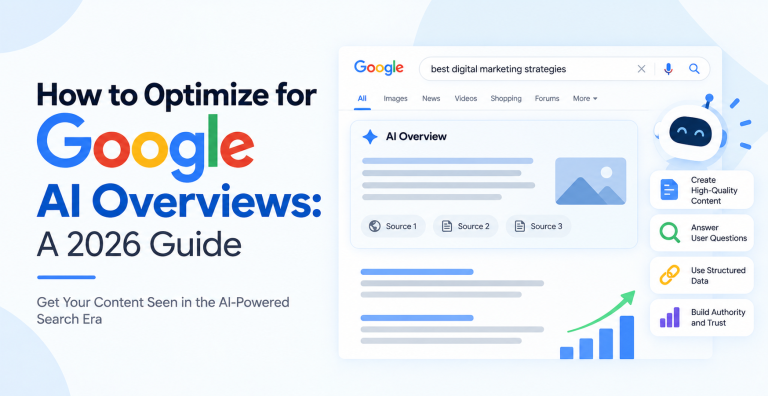
A Google AI Overview is an AI generated summary that appears at the top of the search results for many queries. It pulls information from web pages, writes a short answer, and links to the sources it used. For the searcher, it is a fast answer without clicking. For your business, it is a new and valuable place to appear, because the pages cited in that summary get prominent exposure and a link right where attention is highest.
Why AI Overviews Change SEO, and Why Classic SEO Still Wins
It is tempting to think AI search makes traditional SEO obsolete. The opposite is true. Google AI Overviews pull their sources from the top organic results the large majority of the time, so pages that already rank on the first page are the ones getting cited. You cannot skip ranking well and jump straight into the AI answer. Everything you already do for strong SEO, useful content, clean structure, authority, and technical health, is the foundation that makes citation possible. Optimizing for AI Overviews is an extra layer on top of solid SEO, not a replacement for it.
How Google Chooses What to Cite
Google’s AI favors passages that completely and clearly answer a specific question, from sources it trusts. In practice, the content most likely to be cited shares a few traits: it answers the query directly, it is organized under clear headings, it backs claims with data and named sources, it comes from a site with genuine authority on the topic, and it is recent. The rest of this guide turns each of those traits into an action.
Step 1: Rank in the Top 10 Organic Results First
Because AI Overviews draw almost entirely from first page results, your first job is classic ranking. Target a topic where your site can realistically reach the top ten, build a genuinely useful page, earn links, and cover the subject thoroughly. If you are not on page one for a query, focus there before worrying about the AI summary, because citation follows ranking, not the other way around.
Step 2: Answer the Question Directly in the First 100 Words
Google’s AI often lifts its answer from the opening of a page. Lead with a clear, direct answer to the main question in the first hundred words, before any long introduction or backstory. State the answer plainly, then expand on it below. A reader, or an AI, should get the core answer immediately, not after three paragraphs of warm up.
Step 3: Write Self-Contained, Complete Passages
AI Overviews tend to quote compact passages that fully answer a point on their own, typically a paragraph of roughly 130 to 170 words. Write each section so it makes complete sense without the reader needing the paragraphs around it. Cover the who, what, why, and how of that specific point in one self-contained block. Content that fully answers a question, rather than half answering it, is far more likely to be pulled into the summary.
Step 4: Back Every Claim with Evidence
The AI prefers content it can trust, and evidence signals trust. Support your statements with specific numbers, dates, and facts, and attribute them to named, reputable sources. Original data, clear statistics, and concrete examples all make a passage more citable than vague generalizations. Where a claim would benefit from a figure, add the figure rather than leaving it soft.
Step 5: Use a Clean Structure Google Can Extract
AI systems parse structure to understand and lift content, so make your page easy to read for a machine as well as a person.
Use one clear H1 and a logical hierarchy of H2 and H3 headings that phrase sections as the questions people actually ask. Break complex information into bulleted or numbered lists. Use comparison tables for anything with multiple options or attributes, since tables are among the formats cited most often. Keep paragraphs short and focused. The easier your content is to extract in clean chunks, the more likely a chunk ends up in the overview.
Step 6: Add Structured Data
Schema markup helps Google understand what your content is and how its parts relate. Add relevant structured data such as FAQ, HowTo, Article, and Breadcrumb schema where it fits your content. Structured data does not guarantee citation, but it removes ambiguity about your page, which supports both classic rich results and AI understanding. This sits alongside your wider on-page optimization work.
Step 7: Build Topical Authority and E-E-A-T
Google leans heavily on experience, expertise, authoritativeness, and trust, together called E-E-A-T, when deciding which sources its AI should quote. Build a deep cluster of content around your core topics rather than one shallow page each. Show real expertise with author bios, credentials, and first hand experience. Earn links and mentions from other respected sites. A site recognized as an authority on a subject is far more likely to be chosen as a source for that subject’s AI answers.
Step 8: Keep Your Content Fresh
Google’s AI weights recency, and stale pages quietly drop out of the summaries. Refresh the pages you want cited at least once a quarter. Update statistics to the latest figures, swap in current examples, revise anything that has changed, and republish with a visible updated date. A page that is clearly current beats an equally good page that looks years old.
Step 9: Optimize Images and Video
AI Overviews are increasingly multi-modal, meaning they can surface images and video alongside text. Give every image a descriptive, keyword aware file name and alt text so it can be understood and pulled into visual results. Where video suits the topic, add it and provide a clear title and description. This widens the ways your content can appear in an AI answer.
Step 10: Monitor and Improve
Optimization is ongoing, so measure and iterate. Each month, search your target queries and note which trigger an AI Overview and whether you are cited. Find pages that rank well in classic results but are missing from the AI answer, then rewrite their opening to answer the question more directly and add stronger evidence. Track whether citations rise over time, and double down on the formats and topics that win them.
Common Mistakes to Avoid
- Chasing AI Overviews before ranking. If you are not on page one, citation is out of reach.
- Burying the answer. A long wind up before the answer keeps your passage out of the summary.
- Vague, unsupported claims. Content without evidence is passed over for content with it.
- Messy structure. Walls of text with no headings or lists are hard for the AI to extract.
- Letting pages go stale. Outdated statistics and dates cost you recency.
- Thin, one off pages. Without topical depth and authority, trust signals stay weak.
Your AI Overviews Optimization Checklist
- Page ranks in the top ten organic results for the target query
- Direct answer to the main question within the first 100 words
- Self-contained passages that fully answer each point
- Claims backed by specific data and named sources
- Clear H1, question based H2 and H3 headings, lists, and tables
- Relevant schema markup in place
- Real author expertise and topical authority shown
- Content refreshed at least quarterly with a visible date
- Images and video optimized with descriptive alt text
- Monthly monitoring of which queries cite your pages
Frequently Asked Questions
What are Google AI Overviews?
Google AI Overviews are AI generated summaries that appear at the top of search results for many queries. They answer the question directly and cite the web pages used as sources, giving those pages prominent visibility above the traditional results.
Does classic SEO still matter with AI Overviews?
Yes, more than ever. AI Overviews pull their sources overwhelmingly from the top organic results, so you must rank on the first page to be cited. Strong content, authority, and technical health remain the foundation, with AI optimization layered on top.
How do I get my content cited in an AI Overview?
Rank in the top ten first, then answer the query directly in the opening, write self-contained passages that fully cover each point, back claims with data and named sources, structure the page with clear headings, lists, and tables, add schema, show real expertise, and keep the content fresh.
Do AI Overviews reduce my website traffic?
They can reduce clicks for simple informational queries the AI answers outright. However, being cited in the overview earns prominent visibility and still drives qualified clicks, and many commercial and complex queries continue to send strong traffic. Optimizing to be the cited source is how you protect and grow visibility.
What is the difference between AI Overviews and AEO or GEO?
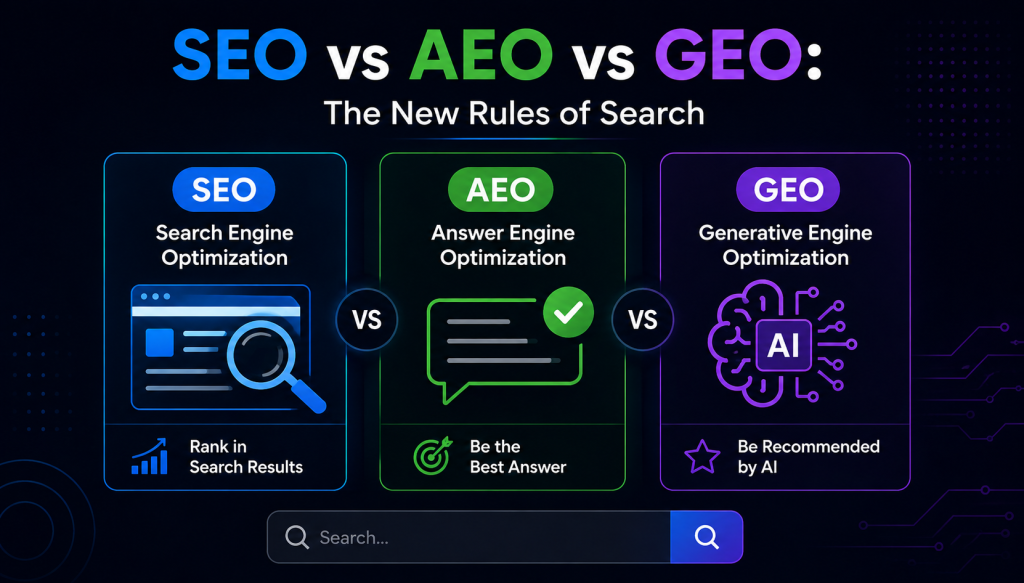
AI Overviews are Google’s specific feature. AEO, or answer engine optimization, and GEO, or generative engine optimization, are the broader disciplines of optimizing for all AI answer engines, including ChatGPT and Perplexity. Getting cited in AI Overviews is one important part of that wider effort. Our guide on SEO vs AEO vs GEO explains how they fit together.
How often should I update content for AI Overviews?
Refresh the pages you want cited at least once every quarter. Update statistics, examples, and any changed details, then republish with a visible updated date, because Google’s AI actively favors content that is current.
Google AI Overviews reward the same things good SEO always has, taken one step further: rank well, answer clearly, prove your claims, structure your content cleanly, and stay current. Get those right and your pages will not just rank, they will become the sources Google’s AI quotes. If you want a team to build that visibility for you across both classic and AI search, our SEO services cover the full strategy.