Your buyers have started asking AI assistants the questions they used to type into Google. They ask ChatGPT which tool to pick, Perplexity to compare vendors, and they read Google’s AI Overview before they ever scroll to a blue link. In every one of those answers, only a handful of brands get named. Generative Engine Optimization (GEO) is how you make sure yours is one of them.
This guide explains what GEO is, how generative engines actually choose and cite sources, how GEO differs from traditional SEO, and a practical 8-step framework you can start using this quarter. It is written from what we see day to day running AI SEO for clients worldwide, not from theory.
What Is Generative Engine Optimization (GEO)?
Generative Engine Optimization is the practice of optimizing your brand, content, and entities so that generative AI engines recommend and cite you inside the answers they create. Those engines include ChatGPT and SearchGPT, Google’s AI Overviews and AI Mode, Gemini, Perplexity, Microsoft Copilot, and Claude.
Traditional search gives a user ten links and lets them choose. A generative engine does the choosing for them: it synthesises one answer and names a few trusted sources. GEO is the work of becoming one of those named, trusted sources, so that when an engine answers a question in your market, your brand is part of the answer rather than buried beneath it.
It helps to be precise about three overlapping terms, because they are often used interchangeably:
- GEO (Generative Engine Optimization): getting pulled into answers generated by AI engines like ChatGPT, Gemini, and Perplexity.
- AEO (Answer Engine Optimization): becoming the direct answer in AI assistants, voice search, featured snippets, and Google AI Overviews.
- SEO (traditional): earning rankings on the classic search results page.
They reinforce each other. GEO is the newest and, right now, the least contested.
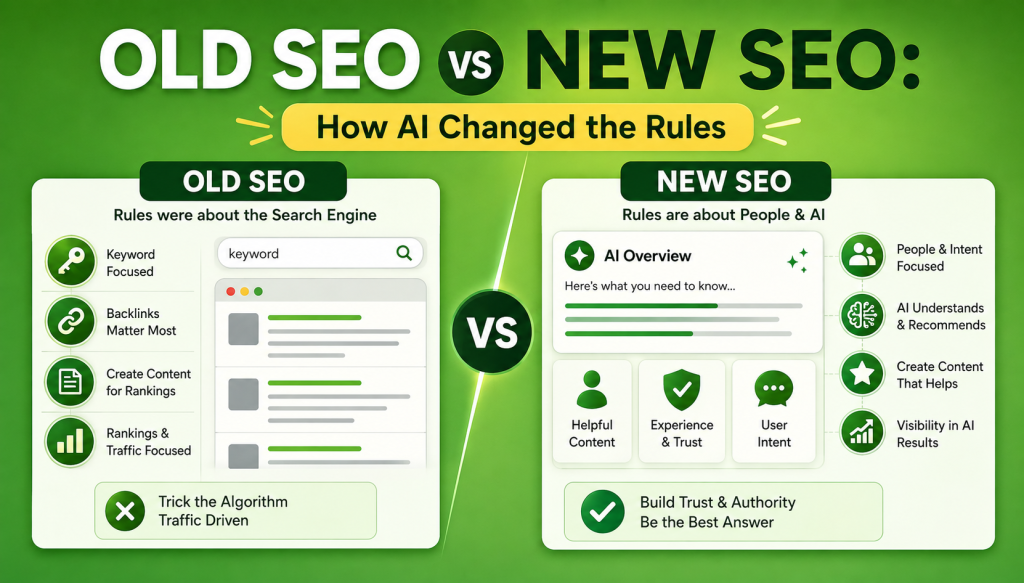
GEO vs Traditional SEO vs AEO
The fastest way to understand GEO is to compare it with what you already know.
| Traditional SEO | GEO | |
|---|---|---|
| Where you show up | Ten blue links | Cited inside AI-generated answers |
| Who chooses | The user | The AI engine |
| Main levers | Keywords, backlinks, on-page | Entities, authority, quotable content, citations |
| Success metric | Rankings and traffic | Citation share in AI answers |
Traditional SEO is not going away, and most of it still feeds GEO: an engine can only cite content it can crawl, understand, and trust. But GEO adds a new battleground where there are no ten links to compete for, only a few names an engine is willing to repeat. AEO sits in the middle, focused on being the single direct answer in snippets, voice, and AI Overviews.
If you want this handled end to end, that is exactly what our AI SEO, GEO & AEO services are built for.
How Generative Engines Pick and Cite Sources
Generative engines do not “rank” pages the way Google’s ten links do. Most of them answer by retrieving relevant, trusted material and then summarising it, citing the sources they leaned on. In practice, a few signals decide whether your brand makes the cut:
- Crawlability and access. If AI crawlers cannot reach your content, you cannot be cited. This is the most common and most fixable reason brands are invisible.
- Entity clarity. Engines need to understand who you are as an entity, what you do, and how you relate to your category. Clear, consistent information across the web builds that understanding.
- Quotable, structured content. Direct answers, clear definitions, statistics, comparisons, and well-formed lists are easy for a model to lift and attribute. Rambling, unstructured pages are not.
- Third-party authority. Engines trust brands that independent, reputable sites talk about. Mentions and citations across the web teach a model to associate your name with your topic.
- Consensus and freshness. When several trusted sources agree, and the information is current, a model is far more confident repeating it.
In short, generative engines reward brands that are easy to find, easy to understand, easy to quote, and widely vouched for. GEO is the deliberate pursuit of all four.
How to Do GEO: An 8-Step Framework
Here is the framework we use to take a brand from invisible to cited. You can run it in order.
1. Audit your AI visibility
Before you change anything, find out where you stand. Run a fixed set of real buyer prompts through ChatGPT, Gemini, Perplexity, and Google AI Overviews, and record where you are mentioned, where competitors are, and where no one is. That baseline tells you exactly what to fix.
2. Build entity clarity
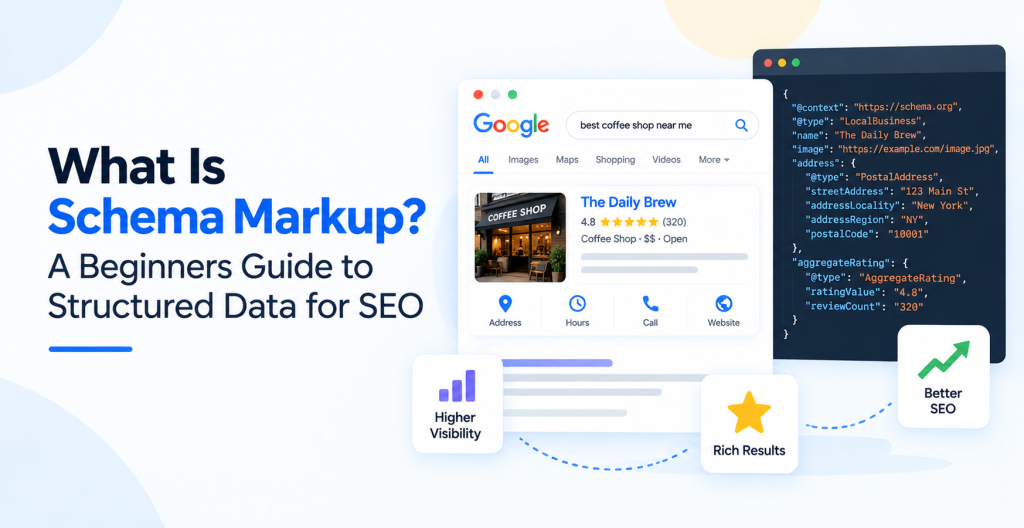
Make it unmistakable who you are. Tighten your About page, keep your name, category, and contact details consistent everywhere, use Organization and other relevant schema, and strengthen your presence on the sources engines lean on to understand entities. The goal is for a model to describe your brand accurately without guessing.
3. Create citable, structured content
Write content designed to be quoted. Lead sections with a clear, direct answer, support claims with specific facts, and use headings, short paragraphs, tables, and FAQs so a model can extract a clean, attributable passage. Depth and clarity beat keyword stuffing every time.
4. Earn mentions and citations
Digital PR and genuine third-party coverage are now ranking factors for AI, not just for links. Being referenced on trusted industry sites, roundups, and expert content teaches engines to associate your brand with your topic. Quality and relevance matter far more than volume.
5. Open the door to AI crawlers
Allow the crawlers that feed these engines, including GPTBot, PerplexityBot, ClaudeBot, and Google-Extended, unless you have a specific reason not to. Consider an llms.txt file, keep your site technically clean, and use structured data so machines parse your content correctly.
6. Target the questions buyers actually ask
Map the prompts your customers use at each stage, from “what is…” and “how do I…” through to “best…” and “X vs Y,” and build content that answers them directly. These question-shaped queries are where generative engines most often look for something to cite.
7. Keep content fresh and accurate
Models prefer current, consistent information. Review and update your key pages on a schedule, correct anything out of date, and make sure your claims line up across your own properties. Stale or contradictory content quietly erodes trust.
8. Measure, report, and iterate
GEO is not set-and-forget. Re-run your prompt set every month, watch your citation share move, double down on what is working, and feed the learnings back into content and PR. The brands that compound their advantage are the ones that measure.
How to Measure GEO Success: Citation Share
Vague promises do not work in GEO. The metric that matters is citation share: how often your brand is cited across a fixed set of real buyer prompts, versus named competitors, measured over time.
The method is simple and repeatable:
- Define a fixed set of buyer prompts that reflect how your customers actually ask.
- Run them across ChatGPT, Gemini, Perplexity, and Google AI Overviews.
- Record how often you are cited versus competitors.
- Re-run the same set every month and track the trend.
Because the prompt set is fixed, the comparison is honest: you are watching real movement, not a dashboard of vanity metrics. This is exactly how we report AI visibility for our clients.
Common GEO Mistakes to Avoid
- Blocking AI crawlers by accident. Many “invisible” brands simply never let the engines in.
- Thin, unstructured content. If a model cannot extract a clean, quotable passage, it will quote someone who can.
- No entity presence. If engines are unsure who you are, they leave you out.
- Chasing volume over quotability. One authoritative, well-structured page beats ten shallow ones.
- No measurement. Without citation share, you cannot tell GEO from guesswork.
Should You Invest in GEO Now?
AI answers already shape a large and growing share of research and buying decisions, and these answers name only a few sources. The space is still open, and early, well-structured authority is hard for latecomers to displace. For most brands, the right move is to start building citable authority now, while there is still room to own your category’s answers.
If you would rather have specialists handle it, optmistic is an AI SEO company that combines GEO, AEO, and proven SEO into one strategy. We have delivered results since 2016, across 220+ projects for clients worldwide, and our team is SEMrush-certified. See our AI SEO, GEO & AEO services or get a free AI visibility audit to see exactly where your brand stands today.
Frequently Asked Questions
What is generative engine optimization?
Generative engine optimization (GEO) is optimizing your brand and content so AI engines like ChatGPT, Gemini, Perplexity, and Google AI Overviews recommend and cite you inside the answers they generate. It combines traditional SEO with entity clarity, citable content, and third-party authority.
How does generative engine optimization work?
Generative engines retrieve trusted, relevant content and summarise it, citing the sources they rely on. They favour brands that are crawlable, clearly understood as entities, easy to quote, current, and widely referenced across the web. GEO is the work of strengthening all of those signals.
How is GEO different from traditional SEO?
Traditional SEO targets rankings on the search results page; GEO targets being cited inside AI-generated answers. SEO still feeds GEO, because an engine can only cite content it can crawl and trust, but GEO adds a new surface where only a few sources get named.
How do you measure GEO success?
With citation share: run a fixed set of real buyer prompts across ChatGPT, Gemini, Perplexity, and AI Overviews, measure how often your brand is cited versus competitors, and re-run the same set monthly to track the trend.
Can small businesses do GEO?
Yes. AI answers reward well-structured, trustworthy content rather than big budgets, so smaller brands can compete, especially in focused niches. Clear entities, citable content, and a handful of quality mentions go a long way.
How long does GEO take to show results?
It varies by niche and starting authority, but because the space is still open, brands that build citable authority and third-party mentions consistently often see citation share improve within a few months.