When someone nearby searches “near me” or looks up a service in your city, Google decides in a split second which handful of businesses to show in the local pack and on Maps. Local SEO is how you make sure yours is one of them. Get it right and you capture high-intent customers who are ready to call, visit, or buy; get it wrong and you are invisible exactly when it matters most.
This is a complete, practical local SEO checklist for 2026. Work through the eight sections below on your own business, tick off what is done, and fix what is missing. If you would rather have it handled end to end, our local SEO services cover every item on this list.
Why Local SEO Matters
Local search has its own rules. Google ranks local results mainly on three factors: relevance (how well you match the search), distance (how close you are to the searcher), and prominence (how well-known and trusted your business is). Unlike regular organic results, a big slice of local visibility happens in the “local pack”, the map and three business listings that sit at the top of local searches, and on Google Maps itself.
That means local SEO is part on-page SEO, part Google Business Profile optimisation, and part reputation. This checklist covers all three.
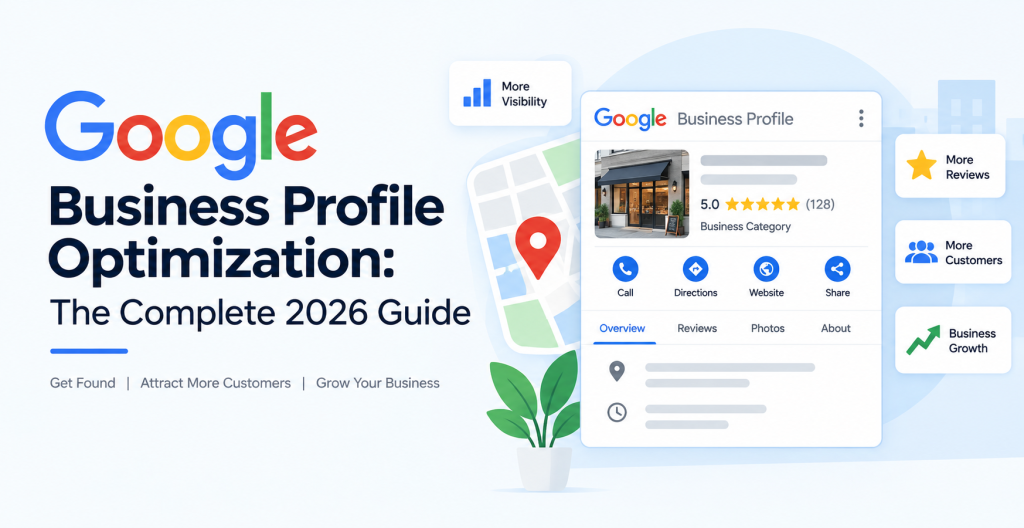
1. Google Business Profile (Your #1 Local Asset)
Your Google Business Profile (GBP) is the single most important local ranking factor and the thing searchers see first. For many local businesses it generates more calls, direction requests, and visits than the website itself, so treat it as a core asset, not an afterthought. Optimise it fully.
- Claim and verify your profile. An unverified or unclaimed listing cannot rank or be fully managed.
- Choose the right primary category. This heavily influences which searches you show up for; pick the most accurate primary category, then add relevant secondary ones. It is worth studying which categories the top-ranking competitors in your area use, because the right primary category is often the fastest lever for local visibility.
- Complete every field. Business name, address, phone, website, hours, services, and attributes, Google favours complete profiles.
- Write a keyword-aware business description. Describe what you do and where, naturally, without stuffing.
- Add real photos and keep adding them. Exterior, interior, team, and work photos build trust and engagement; fresh photos signal an active business.
- Use Google Posts. Regular updates, offers, and events keep your profile active and give searchers a reason to engage.
- Enable messaging and Q&A. Respond quickly, and seed your own FAQ in the Q&A section with accurate answers.
- Keep hours accurate. Update holiday hours; wrong hours frustrate customers and hurt trust signals.
For businesses that depend heavily on Maps visibility specifically, our Google Maps optimization service goes deeper on this.
2. NAP Consistency and Local Citations
NAP stands for Name, Address, and Phone number. Search engines cross-check these across the web to confirm your business is real and consistent, so inconsistencies quietly erode your rankings. Even small mismatches, “St” in one place and “Street” in another, an old phone number on a forgotten directory, can make Google less confident about your business, and that uncertainty costs you local visibility.
- Make your NAP identical everywhere. Same format on your website, GBP, social profiles, and every directory.
- Build core citations. List your business on the major directories and data aggregators relevant to your region and industry.
- Add niche and local citations. Industry-specific directories and local chambers or associations carry extra relevance.
- Audit and fix old listings. Duplicate, outdated, or wrong listings confuse engines; find and correct or remove them.
- Put NAP in your site footer. Ideally with LocalBusiness schema so machines read it cleanly.
3. On-Page Local SEO
Your website still has to tell Google where you operate and what you do.
- Target local keywords. Use “service + city” phrasing in titles, headings, and content where it reads naturally.
- Create location pages. If you serve multiple areas, build a dedicated, genuinely unique page for each, not thin duplicates. Each page should have its own useful content, local details, testimonials, and address information, so it earns its place rather than looking like a template with the city name swapped out, which Google is good at spotting and ignoring.
- Optimise title tags and meta descriptions. Include your service and location, and write for clicks.
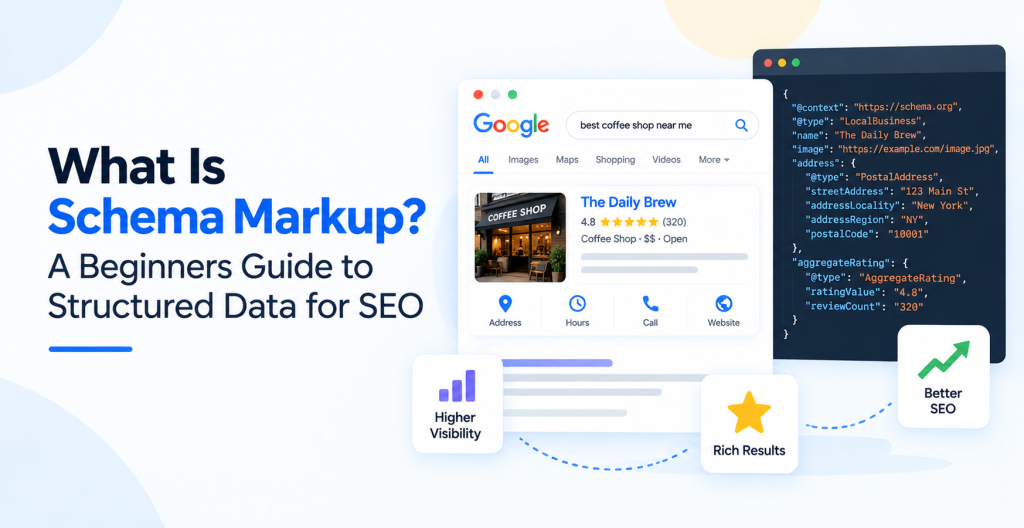
- Add LocalBusiness schema. Structured data for your name, address, phone, hours, and geo-coordinates helps engines and can enhance your listing.
- Embed a Google Map of your location on your contact page.
- Write for your local audience. Mention neighbourhoods, landmarks, and local specifics that prove you genuinely serve the area.
4. Reviews and Reputation
Reviews are both a ranking factor and the thing that convinces a searcher to choose you over the business next to you. Google looks at your review quantity, your average rating, how recently you have been reviewed, and how you respond, so a profile with steady, recent, well-handled reviews outperforms one with a few old five-star ratings and silence.
- Earn reviews consistently. A steady flow of genuine reviews beats a one-time burst; make asking part of your routine.
- Make it easy. Share a direct review link with happy customers right after a positive experience.
- Respond to every review. Thank positive reviewers and handle negative ones professionally; Google and customers both notice.
- Aim for keyword-rich, specific reviews naturally, by asking customers what service they used and whether they would mention it.
- Never buy or fake reviews. It violates Google’s policies and can get your listing suspended.
- Monitor other review platforms your industry relies on, not just Google.
5. Local Content and Keywords
Content gives you something to rank with beyond your core pages and feeds your whole local presence.
- Do local keyword research. Find the “service + location” and “near me” terms your customers actually use.
- Publish genuinely useful local content. Guides, FAQs, and answers to local questions build relevance and authority.
- Answer the questions buyers ask. Question-style content also helps you appear in AI Overviews and AI answers; see our AI SEO services for how local and AI search now overlap.
- Keep content fresh. Update seasonal and time-sensitive pages so they stay accurate.
6. Local Link Building
Links from relevant, local sources are a strong prominence signal, and they are often easier to earn than national links because local relationships are within reach.
- Earn local links. Sponsor local events, partner with nearby businesses, or join local organisations that link to members.
- Get listed by local media and blogs through genuine newsworthiness or useful contributions.
- Pursue relevant industry links, not just local ones, to build overall authority.
- Prioritise quality and relevance over volume, exactly as you would with any white hat link building.
7. Technical and Mobile
Local searchers are overwhelmingly on phones, so the basics have to be flawless.
- Be fully mobile-friendly. Responsive design, tappable buttons, and a clickable phone number.
- Fix site speed. Slow pages lose impatient local searchers and hurt rankings.
- Ensure you are crawlable and indexed. Check coverage in Google Search Console.
- Use HTTPS. Security is a baseline trust and ranking signal.
- Make your contact details instantly visible. Address, phone, and hours should be easy to find on mobile.
8. Track and Measure
You cannot improve what you do not watch.
- Monitor local rankings for your key “service + city” terms and your position in the local pack.
- Track Google Business Profile insights. Views, searches, calls, direction requests, and website clicks show what is working.
- Watch calls, form fills, and direction requests, the actions that turn into revenue.
- Review Search Console for the local queries bringing you impressions and clicks.
- Reassess quarterly. Local SEO is ongoing; competitors move, and so should you.
Tie these numbers back to revenue. Rankings and profile views are useful, but the metrics that prove local SEO is working are the calls, bookings, and walk-ins it drives, so connect your tracking to real business outcomes wherever you can.
Common Local SEO Mistakes to Avoid
- Inconsistent NAP across listings, the most common and most damaging error.
- An incomplete or unverified Google Business Profile.
- Ignoring reviews, or worse, buying fake ones.
- Thin, duplicated location pages that add no real value.
- Treating local SEO as one-and-done instead of an ongoing routine.
Turn the Checklist Into Local Rankings
Local SEO rewards consistency more than cleverness: a complete, verified Google Business Profile, consistent NAP everywhere, genuine reviews, locally relevant content, and a few quality local links, maintained over time. Work through this checklist on your own business and you will steadily climb the local pack and Maps for the searches that bring in customers.
If you would rather have specialists run it for you, optmistic provides full local SEO services that cover every item on this list, from Google Business Profile optimisation to citations, reviews, and local content. We have delivered results since 2016, across 220+ projects for clients worldwide, and our team is SEMrush-certified. Get in touch for a free local SEO audit.
Frequently Asked Questions
What is a local SEO checklist?
A local SEO checklist is a step-by-step list of the tasks that help a business rank in local search results, the local pack, and Google Maps. It typically covers Google Business Profile optimisation, NAP consistency and citations, on-page local SEO, reviews, local content, local links, technical basics, and tracking.
How do I rank higher in the local pack?
Fully optimise and verify your Google Business Profile, keep your name, address, and phone consistent across the web, earn a steady stream of genuine reviews, target local keywords on relevant pages, and build a few quality local links. Google ranks local results on relevance, distance, and prominence, and these steps strengthen all three.
How long does local SEO take to work?
It varies by competition and your starting point, but many businesses see movement within a few months of consistent work. Google Business Profile improvements can show faster, while citations, reviews, and links compound over time.
What is the most important local SEO ranking factor?
Your Google Business Profile is the single most influential local ranking asset, followed closely by NAP consistency, reviews, and relevance signals on your website. No single item wins alone; local SEO rewards getting the whole checklist right consistently.
Do I need a website for local SEO?
Yes. While your Google Business Profile does a lot of the work, a fast, mobile-friendly website with local keywords, location pages, and LocalBusiness schema strengthens relevance, supports your profile, and gives you somewhere to convert the visitors local search sends you.