If your customers are nearby, local SEO is probably the highest-return marketing you can do. It puts your business in front of people who are searching for exactly what you offer, in your area, right when they are ready to act. The good news is that local SEO follows a clear, repeatable process, and you do not need to be a technical expert to work through it.
This step-by-step guide walks you through how to do local SEO from scratch, in the order that makes sense for a business starting out. For a quick tick-box version once you understand the why behind each step, keep our complete local SEO checklist open alongside it.
First, What Is Local SEO (and Why It’s Different)
Local SEO is the process of optimising your online presence so your business appears when people search for products or services “near me” or in a specific location. It is different from regular SEO in one important way: Google ranks local results on three factors, relevance (how well you match the search), distance (how close you are to the searcher), and prominence (how established and trusted your business is).
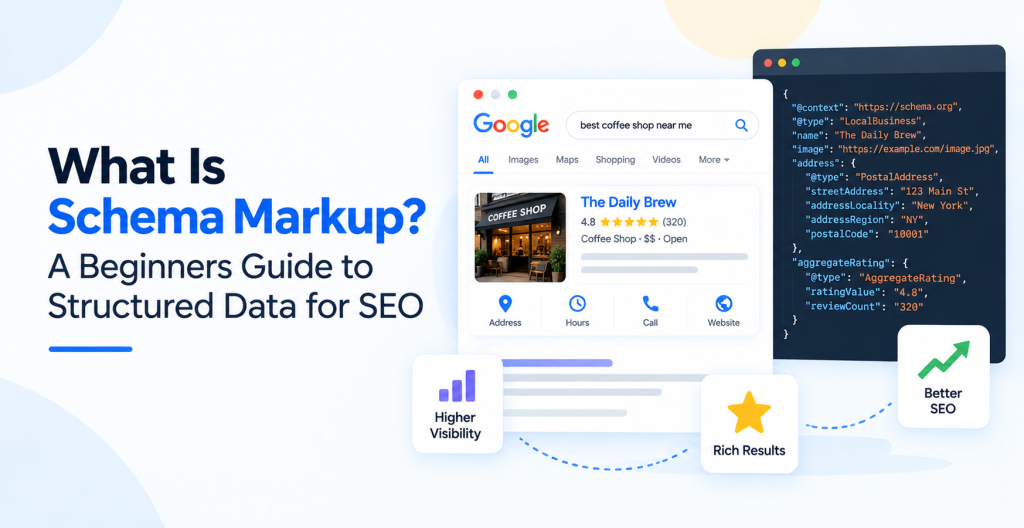
It also has its own real estate. Alongside the normal blue links, local searches show the “local pack”, a map with the top three businesses, and Google Maps results. A huge share of local clicks happen there, which is why your Google Business Profile matters as much as your website. Keep those three factors and that local pack in mind, because every step below is really about strengthening one of them.
Step 1: Set Up and Optimise Your Google Business Profile
Start here, because your Google Business Profile (GBP) is the single biggest driver of local visibility and often sends more calls and visits than your website.
Claim and verify your profile first, then fill in every field: the right primary category, accurate business name, address, phone, website, hours, and services. The primary category deserves real thought, because it strongly influences which searches you appear for; look at what the top-ranking businesses in your area use and match the most accurate option. Add real photos of your premises, team, and work, write a clear description of what you do and where, and keep your hours up to date, including holidays. Once it is set up, keep it active with Google Posts and by answering questions and messages promptly. An active, complete, accurate profile is what Google wants to show, and what customers trust.
Step 2: Do Local Keyword Research
Before you optimise anything else, understand what your customers actually type. Local keywords usually combine a service with a location, like “emergency plumber in Austin,” along with “near me” searches and question-style queries.
Make a list of your core services, pair each with the locations you serve, and check the search volume and difficulty with a keyword tool. For example, a dentist in Denver might map “teeth whitening Denver,” “emergency dentist near me,” and “how much do veneers cost in Denver,” each a slightly different intent that deserves its own page or section. Look at what competitors who already rank are targeting, and note the questions people ask, because those make great content later. This list becomes the backbone for your website pages, your content, and even how you describe your services on your profile.
Step 3: Optimise Your Website for Local Search
Your Google Business Profile does a lot, but your website still has to reinforce who you are, what you do, and where you do it.
Work your “service + location” keywords naturally into your title tags, headings, and page content. If you serve several areas, create a dedicated, genuinely useful page for each location, with its own content, local details, and testimonials, rather than thin copies with the city name swapped out, which Google is good at spotting and ignoring. Add LocalBusiness schema so search engines can read your name, address, phone, and hours cleanly, embed a map on your contact page, and make sure your NAP (name, address, phone) is in the footer. Because almost all local searches happen on phones, double-check that your site is fast, mobile-friendly, and that your phone number is tappable. The goal is for both humans and search engines to immediately understand your local relevance.
Step 4: Build Citations and Fix Your NAP
A citation is any online mention of your business name, address, and phone number, on directories, review sites, and listings. Search engines use them to confirm your business is real and consistent, so they are a core prominence signal.
List your business on the major directories and data aggregators for your region and industry, add any relevant niche or local listings, and, most importantly, make sure your NAP is identical everywhere. Even small mismatches, an abbreviated street name here, an old phone number there, make Google less confident about your business. If you have been around a while, audit your existing listings and fix or remove duplicates and outdated entries.
Step 5: Earn Reviews and Manage Your Reputation
Reviews influence both your rankings and whether a searcher chooses you over the business listed right next to you. Google pays attention to how many reviews you have, your average rating, how recent they are, and how you respond.
Make asking for reviews part of your routine, request them from happy customers right after a good experience, and make it easy with a direct review link. Respond to every review, thanking positive reviewers and handling negative ones calmly and professionally, because prospects read your responses as much as the reviews themselves. Never buy or fake reviews; it breaks Google’s rules and can get your profile suspended.
Step 6: Build Local Links and Authority
Links from relevant, local sources tell Google your business is established and trusted, and they are often easier to earn than national links because the relationships are close to home.
Sponsor a local event, partner with complementary nearby businesses, join your chamber of commerce or local associations, and look for local media or bloggers who might cover something genuinely newsworthy about your business. Being mentioned and linked by trusted sites in your area also reinforces to search engines, and increasingly to AI assistants, that you are an established part of the local community. A handful of quality, relevant local links does far more for your prominence than a pile of random ones, so focus on relevance over volume.
Step 7: Create Helpful Local Content
Content gives you more ways to be found and more reasons for people and search engines to trust you. Use the questions and keywords from your research to publish genuinely useful local content: area guides, answers to common local questions, service explanations, and FAQs.
Well-structured, question-led content also helps you show up in Google’s AI Overviews and in AI assistants, so a single helpful page can earn visibility across several surfaces at once. Keep seasonal and time-sensitive pages updated so they stay accurate and keep working for you.
Step 8: Track Results and Keep Improving
Local SEO is not a one-time project; it is an ongoing routine. Once your foundations are in place, watch what is working and refine.
Monitor your rankings for key “service + city” terms and your position in the local pack, check your Google Business Profile insights for views, calls, and direction requests, and keep an eye on Search Console for the local queries bringing you traffic. Most importantly, track the real outcomes, calls, bookings, and visits, because those are what local SEO is ultimately for. Review everything quarterly, because your competitors are not standing still either.
How Long Until Local SEO Works?
It depends on your competition and starting point, but it is realistic to see early movement within a few months of consistent work. Google Business Profile improvements can show relatively quickly, while citations, reviews, and links compound over time. Local SEO rewards patience and consistency far more than quick tricks.
Do It Yourself or Get Help
You can absolutely work through these steps yourself, especially with the local SEO checklist as your task list. But it takes consistent time, and the results compound when every piece is done well.
If you would rather have specialists handle it, optmistic provides full local SEO services, from Google Business Profile optimisation to citations, reviews, local content, and links. We have delivered results since 2016, across 220+ projects for clients worldwide, and our team is SEMrush-certified. Get in touch for a free local SEO audit and a plan tailored to your business.
Frequently Asked Questions
How do I do local SEO myself?
Work through it in order: set up and fully optimise your Google Business Profile, do local keyword research, optimise your website with location-relevant content and schema, build consistent citations, earn genuine reviews, get a few quality local links, publish helpful local content, and then track and refine. A local SEO checklist makes it easy to confirm nothing is missed.
What is the first step in local SEO?
Setting up and optimising your Google Business Profile. It is the biggest local ranking factor and the first thing searchers see, so a complete, verified, active profile gives you the fastest visibility for the least effort.
How do I do local keyword research?
List your core services, pair each with the locations you serve, and add “near me” and question-style variations. Use a keyword tool to check volume and difficulty, study what ranking competitors target, and note common customer questions to turn into content.
Is local SEO different from regular SEO?
Yes. Regular SEO focuses on ranking in the standard organic results, while local SEO adds Google Business Profile optimisation, citations, reviews, and the local pack. Google also weighs distance and prominence for local queries, not just relevance.
Can I do local SEO without spending money?
Mostly, yes. Optimising your Google Business Profile, keeping your NAP consistent, earning reviews, and publishing helpful content are largely free, they cost time rather than budget. Paid tools and professional help speed things up and scale them, but the fundamentals are accessible to any small business.