Choosing the wrong SEO company is one of the most expensive mistakes a business can make. A bad agency can burn through your budget with nothing to show for it, build manipulative backlinks that earn your site a Google penalty, or keep you locked into a retainer for months before you realize the strategy was never going to work. With thousands of agencies claiming to be the best and new ones launching every week, knowing how to separate legitimate SEO partners from the ones who will waste your time and money is a skill every business owner needs.
This guide gives you the complete checklist for evaluating and selecting an SEO company covering what to look for, the right questions to ask, the red flags that should end the conversation immediately, and the mistakes that even smart businesses make when hiring for SEO. It is based on more than 10 years of SEO work across the US, UK, Canada, and Australia, and the perspective of having seen what good and bad agency engagements look like from both sides.
Why Choosing the Right SEO Company Matters More Than Most Businesses Realize
SEO is not a service you can easily undo. When an agency builds backlinks to your site using private blog networks, automated tools, or link farms, those links remain in your backlink profile long after you part ways and they continue to suppress your rankings or attract Google penalties for months or years. When an agency produces thin, generic blog content stuffed with keywords, that content dilutes your site’s overall quality rating in Google’s Helpful Content system, dragging down the rankings of pages that were performing well before they started. Bad SEO compounds over time in the same way good SEO does just in the wrong direction.
The cost of choosing incorrectly goes beyond the wasted retainer fee. Recovery from a Google penalty whether algorithmic from Penguin or a manual action from Google’s spam team requires a full toxic backlink audit, outreach to remove bad links, a disavow file submission, and potentially a formal reconsideration request. This process takes months and does not guarantee full ranking recovery. The cumulative cost in lost organic traffic, lost leads, and paid advertising spend used to compensate for missing organic traffic consistently exceeds the original bad agency fee by a significant multiple. Selecting an SEO company carefully is worth the time investment every time.
What to Look For in an SEO Company
1. Verifiable Results and a Transparent Portfolio
The first filter is evidence. Any SEO company worth considering should be able to show you documented proof of results not just claims. Look for case studies that name the client (or explain why they are anonymized), describe the starting condition, outline the strategy, and show the specific outcome: ranking improvements for specific keywords, organic traffic growth over a defined time period, lead volume or revenue impact. Case studies that say ‘we increased traffic by 300%’ without specifying the baseline, the keyword, the market, or the timeframe are not evidence they are marketing copy.
Check whether the agency ranks for its own target keywords. An SEO company that does not rank for ‘SEO services [city]’ or ‘SEO agency [location]’ is either not practising what they preach or has only recently started operating. Look up their domain in Ahrefs or Semrush both offer limited free checks and review their referring domain profile, their organic keyword rankings, and their traffic trend. If their own site is thin, has no organic traffic, or is built on a freshly registered domain, that tells you something important about their actual capabilities.
2. Client References You Can Actually Contact
Ask for two or three client references you can contact directly not just testimonials on their website. Testimonials are curated. References are verifiable. When you speak to a reference, ask specifically: how long have you worked with them, what were your rankings before they started, what are they now, how do they communicate and report, and would you rehire them if you were starting over? Ask the difficult question: was there a period where results were disappointing, and how did they handle it? The agencies worth hiring have clients who can answer all of these questions positively and specifically.
Check independent review platforms Google Business Profile, Clutch, Trustpilot, Upwork for reviews that show both positive outcomes and how the agency handles problems. A 100% positive review profile with no detailed specifics is often a sign of cherry-picked or incentivized reviews. Look for reviews that mention timelines, communication quality, and specific deliverables these are the signals of genuine client experience.
3. A Clear, Customized Strategy : Not a Template
Any SEO company that sends you a proposal in the first 48 hours of contact without first auditing your current site, reviewing your competitor landscape, and understanding your business objectives is selling a generic service, not a customized strategy. Good SEO starts with a diagnostic what is the current state of your technical SEO, what does your existing backlink profile look like, where do you currently rank and for what, what are your competitors doing that you are not? Without this baseline, no proposal is grounded in your actual situation.
Ask the agency to walk you through how they would approach your specific website and market. The answer should reference your industry, your competitors, your target geography, and the specific SEO opportunities they have already identified. If the walkthrough is generic ‘we will do keyword research, content, and link building‘ without specifics it is a sign that you are buying a standard package, not a strategy. At Optmistic Technologies, every engagement begins with a full technical and content audit before a strategy is proposed.
4. White Hat Methods Only : Non-Negotiable
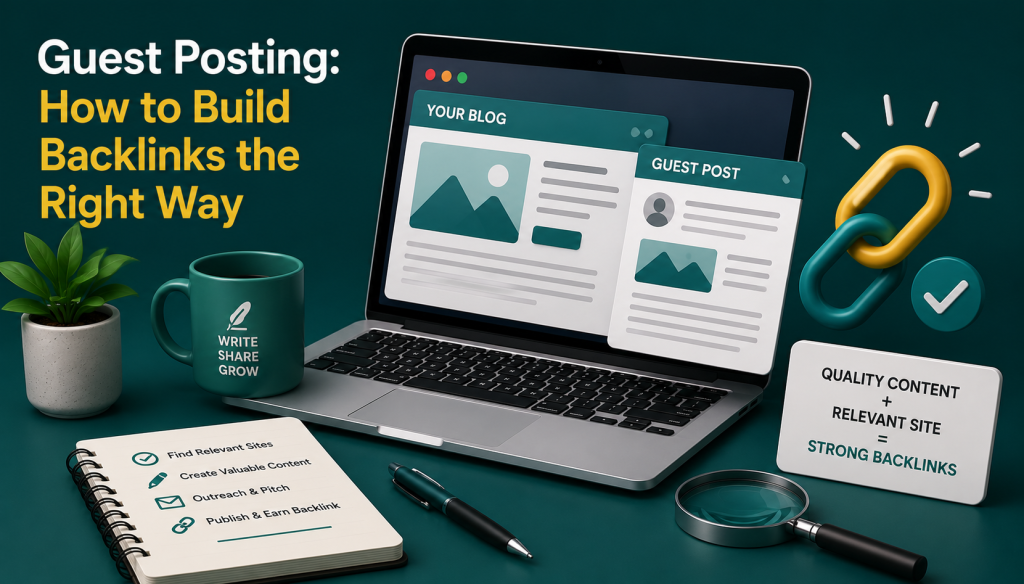
Ask every SEO company you evaluate exactly how they build backlinks. The answer to this question tells you more about the risk to your domain than any other question you can ask. Legitimate white hat link building methods include editorial guest posting on real publications, resource page acquisition, broken link building, digital PR, and unlinked brand mention conversion. These are slow, relationship-based, editorial methods that earn links through genuine value and they produce rankings that hold through algorithm updates.
Red flags in the answer include: private blog networks (PBNs), ‘guaranteed’ link placements on specific high-DA sites, bulk directory submissions, link exchanges, automated outreach tools, and any method described as ‘faster’ than traditional outreach. Google’s Penguin algorithm is now continuous it evaluates link profiles in real time rather than in periodic updates. Links from PBNs and link farms are either discounted immediately or can trigger manual penalties that take months to reverse. The cost of recovering from a Google penalty consistently outweighs any short-term ranking gain from black hat methods.
5. Transparent, Consistent Reporting
Reporting is one of the most reliable indicators of an agency’s actual performance. An agency that is producing results wants you to see them clearly, consistently, and with context. Look for monthly reports that cover keyword ranking movements (not just the keywords that went up), organic traffic trends from Google Analytics and Search Console, backlinks acquired with placement URLs and domain metrics, technical SEO work completed, and the next month’s priorities. Reports should explain what changed, why it changed, and what the plan is going forward.
Avoid agencies that report only on vanity metrics domain authority score, social shares, impressions without clicks or that provide reports so dense with data that the actual impact on your business is impossible to extract. Ask in the initial consultation what their standard monthly report looks like and what metrics they consider the primary indicators of campaign success. If they cannot give you a direct, clear answer to that question, their reporting will not be useful when you need to evaluate whether the engagement is working.
Questions to Ask Before Signing Any SEO Contract
Schedule a consultation with any agency you are seriously considering and come prepared with specific questions. The quality of an agency’s answers to these questions is as revealing as their portfolio. The right agency will answer all of these directly and in detail they will not be evasive, generic, or defensive.
- How will you approach the first 30 days of our engagement what will you audit, what will you fix, and what will you build?
- Can you walk me through your link building process in detail what methods do you use, how do you vet publishers, and how do you report placements?
- What does your standard monthly deliverable set look like what will I receive every month?
- Have you worked with businesses in my industry or targeting my geographic market before? Can you show me a relevant example?
- What happens if rankings drop or organic traffic declines during the engagement what is your process for diagnosing and responding?
- How long does a typical engagement take to produce measurable ranking results for a new client?
- What do you need from our side to execute the campaign effectively content access, website access, approvals?
- What are the main risks in SEO work, and how do you manage them?
Red Flags That Should End the Conversation
Some things an SEO agency says or does should immediately disqualify them from consideration, regardless of how impressive their other credentials appear.
- They guarantee a page-one ranking within a specific timeframe. No one can guarantee a specific ranking Google’s algorithm is not controlled by the agency. Guarantees of this kind either represent a misunderstanding of how SEO works or a willingness to use black hat tactics to achieve short-term positions that will not hold.
- They will not explain their link building methods in detail. Opacity about methodology is almost always a sign that the methods would not withstand scrutiny.
- They ask for full admin access to your website and Google accounts without any security protocols or access limitation and they cannot explain why full access is required rather than contributor-level access.
- They quote a price significantly below market rate. SEO is labour-intensive. An agency offering a complete SEO service for a fraction of what reputable agencies charge is either providing a fraction of the work or using automated tools that carry significant algorithm risk.
- They cannot show you a single case study with verifiable client data. Every established agency has clients they can reference. If they cannot or will not, the track record does not exist.
- They claim their SEO method is proprietary and cannot be explained. Good SEO is not a black box it is a set of well-documented best practices applied with skill and consistency. ‘Proprietary methods’ is often a cover for tactics that violate Google’s guidelines.
Mistakes Businesses Make When Choosing an SEO Company
Choosing on Price Alone
The cheapest SEO option is almost never the best one and in SEO specifically, cheap services carry a disproportionate risk of lasting damage. Low-cost agencies compensate for low margins with automation, templated content, bulk link building, and reduced time investment per client. None of these produce competitive rankings in 2025, and several carry significant Google penalty risk. Compare agencies on value delivered per dollar results produced, reporting quality, client retention rate, methodology transparency not on monthly fee alone.
Limiting Your Search to Local Agencies
Geographic proximity to your SEO agency is irrelevant to the quality of the work. SEO is entirely remote access to your website, Google Search Console, and monthly reporting calls are all that is required for a full engagement. Restricting your search to agencies within driving distance of your office means excluding the majority of qualified agencies, many of which may have specific expertise in your industry, target market, or platform. The agency best qualified to grow your business may be in a different country and that is not a reason to disqualify them.
Signing a Long Contract Before Seeing Any Results
Many agencies push for 12-month contracts signed upfront, before any work has been delivered or any results observed. While SEO does take time to produce measurable results typically 3 to 6 months for meaningful ranking movements a reputable agency does not need a 12-month commitment to begin work. Ask for a shorter initial engagement three to four months with the option to extend. An agency that insists on a long contract upfront has more interest in securing the recurring revenue than in earning the client’s trust through performance.
Not Defining Success Before You Start
Before signing with any SEO agency, agree on the specific metrics that will define success for the engagement: the target keywords, the baseline positions, the target positions, the organic traffic baseline, the conversion rate for organic traffic, and the reporting schedule. Without predefined success metrics, it is impossible to evaluate whether the agency is delivering and easier for an underperforming agency to redefine success retroactively as the engagement progresses. Document the agreed metrics in the contract or engagement letter before work begins.
A Simple Evaluation Framework for Shortlisting SEO Companies
After initial research, narrow your list to three to five agencies and evaluate each against the same criteria. Score each agency out of five on: portfolio quality and verifiability, reference quality, methodology transparency (white hat confirmation), reporting examples, communication responsiveness during the sales process, and price-to-value ratio. The agency that scores highest across these criteria not just the cheapest or the most persuasive on the sales call is the one most likely to deliver. Take at least two weeks for this evaluation. The decision deserves the time.
After signing, establish a clear 90-day review point where you assess progress against the agreed success metrics. If meaningful ranking movement has not begun within 90 days and the agency cannot provide a data-backed explanation for why results are taking longer it is a signal to escalate the conversation or reconsider the engagement. Good SEO agencies welcome the 90-day review because they are confident in the work they have been doing.
What to Expect When You Work With Optmistic Technologies
Optmistic Technologies is a results-driven SEO agency with over 10 years of experience delivering organic search growth for businesses across the US, UK, Canada, and Australia. We hold Top Rated Plus status on Upwork with a 100% Job Success Score across more than 220 completed projects. Our client base spans industries including trades and home services, legal, insurance, healthcare, e-commerce, and B2B and our 95% client retention rate reflects the consistency of results we deliver across all of them.
Every engagement at Optmistic Technologies starts with a comprehensive site audit technical SEO, on-page optimization, content quality, and backlink profile analysis before a single piece of work is proposed. We use exclusively white hat methods: editorial guest posting, resource page link building, broken link building, and digital PR. We do not use private blog networks, paid link schemes, or automated outreach. Every backlink we build is reported with full placement URL, domain metrics, and anchor text. Monthly reporting covers keyword rankings, organic traffic, links acquired, and the following month’s priorities clearly and completely.
Frequently Asked Questions
1. How much does SEO cost?
SEO pricing varies significantly based on the scope of work, the competitiveness of your target market, and the agency’s experience level. As a general benchmark, monthly SEO retainers from reputable agencies range from $500 to $5,000+ per month for small to mid-size businesses, with enterprise-level engagements running significantly higher. Very cheap SEO under $300 per month almost always involves automated or black hat tactics that carry significant Google penalty risk. Focus on the value delivered relative to the cost rather than on the absolute monthly fee.
2. How long does SEO take to produce results?
Most businesses begin to see measurable ranking improvements within 3 to 6 months of starting a well-executed SEO campaign. More competitive keywords and newer domains may take 9 to 12 months for significant first-page rankings. The timeline depends on your current domain authority, your competitive landscape, the volume of technical SEO issues that need fixing before rankings can improve, and the quality and consistency of the SEO work being executed. Any agency that promises significant results in less than 60 days is either targeting very low-competition keywords or using methods that will not hold.
3. What is the difference between white hat and black hat SEO?
White hat SEO uses methods that comply with Google’s Webmaster Guidelines: creating genuinely valuable content, earning backlinks through editorial outreach and quality, and optimizing technical elements to help Google understand your site. Black hat SEO uses manipulative methods that attempt to game Google’s algorithm: private blog networks, paid link schemes, keyword stuffing, cloaking, and automated outreach. White hat results are slower to materialize but durable. Black hat results are faster but frequently reversed by algorithm updates or manual penalties that can take months to recover from.
4. Should I hire an SEO agency or an in-house SEO specialist?
For most small and mid-size businesses, an experienced SEO agency offers better value than an in-house hire. A senior in-house SEO specialist costs $60,000 to $100,000+ per year in salary alone, and a single specialist cannot cover the full range of SEO disciplines technical SEO, content strategy, link building, and analytics with equal depth. A good agency brings a team with complementary specialisms at a fraction of the total cost. In-house SEO makes more sense at the enterprise level, where the site complexity, content volume, and strategic coordination requirements justify a dedicated internal team.
5. How do I know if my SEO company is actually doing the work?
Monthly reports should include specific deliverables: which technical SEO issues were fixed and how, which content pieces were published and their word counts, which backlinks were built with placement URLs and domain metrics, and which keyword positions moved and by how much. If a monthly report consists only of traffic graphs, ranking position averages, and a short commentary paragraph without specific deliverables listed, you are not receiving evidence of work completed. A transparent agency’s report makes it straightforward to verify that the work described was actually done.
6. Can a small business afford SEO?
Yes, and small businesses are often better positioned to benefit from local and niche SEO than larger competitors. Local SEO optimizing for city-specific or region-specific keywords is significantly less competitive than national SEO, meaning that a smaller budget can produce meaningful first-page rankings in a shorter timeframe. A well-executed local SEO campaign with a monthly budget of $500 to $1,500 can produce measurable traffic and lead improvements for a local service business within 3 to 4 months.
7. What questions should I ask an SEO company before hiring them?
The most important questions are: Can you show me case studies with verifiable results for businesses like mine? Can you walk me through exactly how you build backlinks? What will your monthly deliverables look like what will I receive every month? Have you worked in my specific industry or market? What is your process if rankings drop during the engagement? Answers to these questions reveal methodology, transparency, and whether the agency understands your specific situation which is more valuable than any pitch deck.
8. How do I evaluate an SEO proposal?
Evaluate an SEO proposal on four criteria: specificity (does it reference your actual site, market, and competitors, or is it generic?), methodology transparency (does it describe link building methods in detail?), reporting clarity (does it define what you will receive each month and how success will be measured?), and realistic expectations (does it set honest timelines, or does it promise fast results?). Reject any proposal that guarantees specific rankings, refuses to explain link building methods, or sets unrealistic short-term timelines without a data-backed rationale.