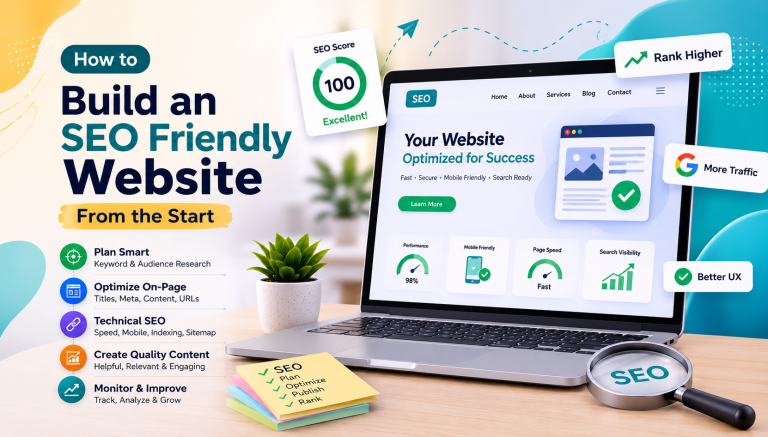
Many businesses build a beautiful website first and think about SEO later, only to wonder why they get no traffic from Google. The truth is that search visibility should be built into your website from the very beginning. An SEO friendly website is designed so search engines can easily find, understand, and rank it, while also giving visitors a fast, smooth experience. Getting this right from the start saves you from expensive fixes down the road.
This guide explains what makes a website SEO friendly and the key steps to build one that ranks. Whether you are launching a new site or improving an existing one, these foundations matter. If you want a site built to rank from day one, professional website SEO development services can help you get it right.
What Is an SEO Friendly Website?
An SEO friendly website is one that is structured and built so search engines can crawl, understand, and index it easily, and so visitors enjoy using it. It combines a solid technical foundation, a clear structure, fast performance, and quality content. The result is a website that not only looks good but is genuinely capable of ranking well and turning visitors into customers.
Why Building SEO In From the Start Matters
Adding SEO after a website is built often means costly rework, such as restructuring pages, fixing URLs, or rebuilding for speed. When SEO is part of the design and development process, everything from your site structure to your code supports your rankings from the moment you launch. This gives you a head start, avoids technical debt, and means your site begins attracting organic traffic much sooner.
Think of SEO like the foundation of a building. It is far easier and cheaper to lay a solid foundation while constructing the building than to reinforce it after the structure is already standing. The same is true for websites. When search visibility is considered at every stage of design and development, you avoid painful rebuilds later and set your site up to grow steadily for years to come.
How to Build an SEO Friendly Website
1) Plan a Clear Site Structure
A logical site structure helps both users and search engines navigate your content. Organize your pages into clear categories with a simple hierarchy, so important pages are easy to reach in just a few clicks. A well planned structure spreads authority through your site and makes it easy for search engines to understand how your pages relate.
2) Use Clean, Descriptive URLs
Your URLs should be short, readable, and descriptive, ideally including relevant keywords. Avoid long strings of numbers or random characters. Clean URLs are easier for visitors to understand and trust, and they give search engines another clear signal about the topic of each page.
3) Make Your Site Fast
Speed is critical for both rankings and user experience. Build your site with clean, efficient code, compress your images, use caching, and choose reliable hosting. A fast website keeps visitors engaged, reduces bounce rates, and performs better in search, especially on mobile where patience is short.
4) Ensure a Mobile Friendly, Responsive Design
Most visitors browse on mobile, and Google uses mobile first indexing. Your website must adapt smoothly to every screen size, with readable text, easy navigation, and tappable buttons. A responsive design is no longer optional, it is essential for ranking and for keeping mobile visitors happy.
5) Optimize Your On Page Elements
Every page should have a unique, keyword rich title tag, a compelling meta description, and well structured headings. Use a single main heading per page and organize the rest with logical subheadings. These on page elements help search engines understand your content and encourage more clicks from search results.
6) Create High Quality, Optimized Content
Content is what earns rankings. Build your pages around the keywords and topics your audience searches for, and make sure every page offers real value and matches search intent. Use clear, readable formatting and cover your topics thoroughly. A great looking site with thin content will never reach its potential.
7) Optimize Your Images
Images enhance your site but can slow it down if not handled well. Compress every image, use descriptive file names, and add alt text so search engines understand them and so your site remains accessible. Optimized images support both your speed and your visibility in image search.
8) Build a Strong Internal Linking Structure
Internal links connect your pages, guide visitors, and distribute authority across your site. Link related pages together with clear, descriptive anchor text so users and search engines can easily discover your content. A thoughtful internal linking strategy strengthens your most important pages and keeps visitors exploring.
9) Secure Your Site With HTTPS
Security is both a ranking signal and a trust factor. Make sure your website runs entirely on HTTPS with a valid SSL certificate. A secure site protects your visitors, builds confidence, and aligns with what search engines expect from a quality website.
10) Set Up Technical SEO Foundations
Behind the scenes, a few technical elements keep your site healthy. Create and submit an XML sitemap, use a robots file to guide crawlers, add structured data where relevant, and fix any broken links or errors. Strong technical SEO ensures search engines can crawl and index your site without obstacles.
How to Test if Your Website Is SEO Friendly
Once your site is live, it is worth checking how SEO friendly it really is. Test your loading speed on both desktop and mobile, and make sure it passes a mobile friendly check. Review whether your pages are being indexed by searching for your site on Google, and use Search Console to spot crawl errors or coverage issues. Click through your own site as a visitor would, checking that navigation is clear and nothing is broken. Regular testing helps you catch and fix issues before they cost you traffic.
Common Mistakes That Hurt Website SEO
Even a well designed site can fall short if it makes these common errors:
- Slow loading pages caused by heavy images or bloated code.
- A confusing structure that buries important pages too deep.
- Duplicate or thin content that offers little value.
- Missing titles, descriptions, or alt text.
- A design that is not truly mobile friendly.
Avoiding these mistakes is just as important as doing the positive work, since a single major issue can hold back an otherwise strong site.
SEO Friendly Website Checklist
Before launching or reviewing a site, make sure it ticks these boxes:
- Clear structure with logical navigation.
- Clean, descriptive, keyword friendly URLs.
- Fast loading on both desktop and mobile.
- Responsive, mobile first design.
- Unique titles, meta descriptions, and headings.
- High quality, optimized content on every page.
- HTTPS security and a valid SSL certificate.
- Sitemap, structured data, and no broken links.
Frequently Asked Questions
Can I make my existing website SEO friendly?
Yes. While it is easier to build SEO in from the start, an existing site can be improved through better structure, faster performance, optimized content, and technical fixes.
Does website design affect SEO?
Absolutely. Design influences speed, mobile experience, navigation, and how long visitors stay, all of which affect your rankings. Good design and good SEO go hand in hand.
How long does it take for a new site to rank?
It varies, but new sites often take a few months to gain traction. Building your site to be SEO friendly from the start helps it rank faster and more reliably.
Do I need a developer to build an SEO friendly site?
You can handle the basics with the right platform and guidance, but for a truly optimized, high performing site, working with experienced developers who understand SEO is a smart investment.
Which is more important, design or SEO?
Neither should come at the expense of the other. The best websites combine attractive, user friendly design with a strong SEO foundation. A beautiful site that no one can find fails, and so does a well optimized site that visitors find hard to use.
Does the platform I choose affect SEO?
Yes. Some platforms make SEO easier than others through better control over speed, structure, and metadata. Choosing a flexible, well supported platform gives you a stronger foundation to build an SEO friendly website.
Conclusion
An SEO friendly website is the foundation of long term search success. By planning a clear structure, using clean URLs, building for speed and mobile, optimizing your content and images, and setting up strong technical foundations, you create a site that search engines love and visitors enjoy. Build SEO in from the start, and your website becomes a powerful, lasting source of traffic and growth. A truly SEO friendly site is never really finished, so keep testing, improving, and updating it as your business and your audience evolve.
If you want a website built to rank and convert from day one, Optmistic Technologies offers professional website SEO development services tailored to your goals. Request a free quote and build a site that works as hard as you do.